Lucignolo
Pinocchio (Tania Zamorsky Edition)Lucignolo, whose given name is Romeo, is Pinocchio’s closest school friend and the companion whose invitation draws him toward Toyland. Their friendship makes the escape feel at first like a shared adventure, but the boys’ matching transformation into Donkeys exposes its cost. Lucignolo’s later death, from hunger and excessive labor, gives their boyhood alliance a tragic conclusion: Pinocchio finds his friend only when the farmer’s exhausted animal is dying.
Identity and Introduction
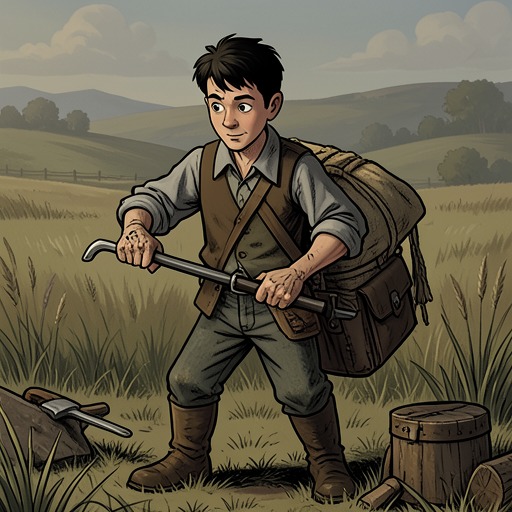
Lucignolo is introduced as Pinocchio’s favorite and dearest among his friends and schoolmates. His given name is Romeo, but everyone calls him Lucignolo because his thin, dry, lanky figure resembles the wick of a small night-lamp. The nickname makes his slight build immediately visible, while the description of him as the laziest and naughtiest boy at school establishes the traits that shape his choices.
Pinocchio’s affection for him is not incidental. When Pinocchio wants to invite his companions to breakfast, he goes to Lucignolo’s home three times and finds him absent each time. He continues searching and eventually spots Lucignolo hiding beneath the portico of a farmhouse. The effort to find him shows the strength of Pinocchio’s attachment before Lucignolo has made any appeal or promise; his influence rests partly on being the friend Pinocchio most wants beside him.
The Invitation to Toyland
When Pinocchio asks where he is going, Lucignolo says that he will soon leave to live in the most beautiful country in the world, a place of abundance, and names it Toyland. He invites Pinocchio to come with him. The offer turns Lucignolo’s habitual aversion to school into a concrete alternative: instead of study and lessons, he presents a destination organized around pleasure and play.
Pinocchio’s decision to follow him belongs to a relationship already marked by affection. Lucignolo is not a stranger who tricks Pinocchio through a single encounter; he is the cherished schoolmate whose company makes the prospect of leaving more compelling. The invitation therefore brings friendship and bad influence together. Lucignolo offers a shared future, but the country he praises conceals the danger facing boys who abandon study for continual amusement.
Transformation and Shared Recognition
After five months of revelry, Pinocchio is astonished to find a pair of donkey ears growing and to become a complete Donkey, tail included. Later, he visits Lucignolo and sees him wearing a large cotton cap pulled down below his nose. The sight comforts Pinocchio briefly because it suggests that his friend may be suffering from the same illness. Their recognition is delayed until they remove their caps: both have become victims of the same change.
Rather than respond first with shame or grief, the two boys point out one another’s enormous ears and laugh together. Their laughter makes the transformation a shared spectacle, almost a last moment of fellowship before its full physical consequences take hold. Lucignolo is the first to falter. He turns pale, staggers, and asks Pinocchio for help; Pinocchio soon finds that he can no longer stand either.
The change proceeds through their bodies. They drop to all fours and begin moving around the room on hands and feet. Their arms become legs, their faces lengthen into muzzles, and pale grayish coats speckled with black cover their backs. When tails appear, the boys feel the humiliation and pain of what has happened and try to cry and lament. Instead, their voices emerge as brays. The transformation converts their intended escape from school into an imposed animal existence, and the bodily sequence leaves no room for their former human identities to be recovered by will or speech.
Sold into Different Lives
The boys are cleaned, fitted with halters, and taken to the market to be sold for profit. Lucignolo is bought by a farmer whose Donkey had died the day before; Pinocchio is sold to the director of a company of clowns and rope-jumpers, who intends to train him to jump and dance with the troupe’s other animals. Their paths separate at the sale, even though both are now commodities produced by the same exploitation.
The narrator initially admits not knowing what happened to Lucignolo after his purchase. The contrast between the boys’ destinations is nevertheless clear: Pinocchio enters a life of harsh treatment, while Lucignolo disappears into a farmer’s possession. The story later fills in that gap not with an account of Lucignolo’s intervening days, but with the consequence that matters most: he is found exhausted by hunger and excessive work. His end shows that the sale was not a rescue from Toyland’s deception but the beginning of another form of suffering.
Death and the Meaning of the Reunion
Years later, when Pinocchio is led into a stable, he sees a Donkey lying on the straw, worn out by hunger and too much labor. The animal’s face seems familiar, and Pinocchio bends over to ask who he is in the language of Donkeys. The dying animal opens his failing eyes and answers haltingly that he is Lucignolo; then he closes them and dies.
Pinocchio quietly calls him a poor friend and wipes away a tear with a handful of straw. The farmer rebukes him for grieving over an animal that cost him nothing, adding that he, as the buyer who paid cash, has more reason to care. Pinocchio explains that the Donkey was his friend. This exchange places two valuations side by side: to the farmer, Lucignolo is a purchased animal; to Pinocchio, he remains the beloved schoolmate whose company once drew him into danger. Their friendship survives the transformation in Pinocchio’s recognition and grief, while Lucignolo’s brief final identification restores his human name at the point of death.
Lucignolo’s role in the story is thus both intimate and consequential. His laziness is not merely a personal trait, since the promise of a life without school helps direct Pinocchio toward the very danger that overtakes them both. Yet the tale does not reduce him to an instrument of temptation: Pinocchio’s persistent affection, their shared laughter at their altered ears, and his tears beside the straw preserve the tenderness of their bond. Lucignolo’s death completes the contrast between the freedom he advertised and the exhaustion he endured, and makes Pinocchio’s memory of their friendship the last measure of who he was.